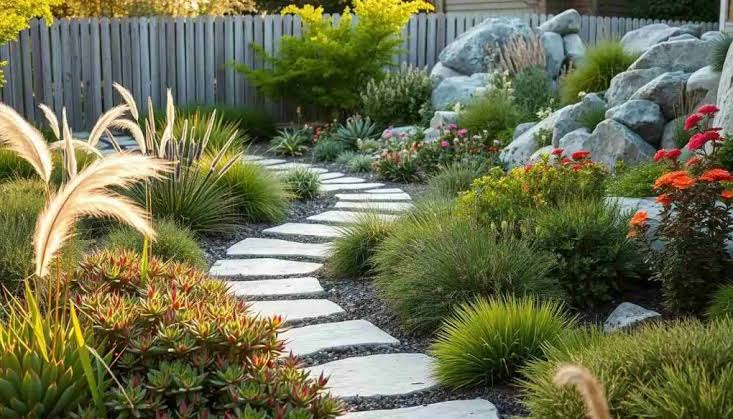
Last updated: September 10, 2026
Table of Contents
- Key Takeaways
- Who this is for, and what you need to know first
- How do I group xeriscape plants without making the bed look random?
- What do sun, shade, and water really mean in xeriscape design?
- When should I stop grouping by a simple sun/shade rule?
- The mistakes people actually make, and what they cost
- How do I handle mixed beds and awkward corners?
- A quick checklist before you plant
Key Takeaways
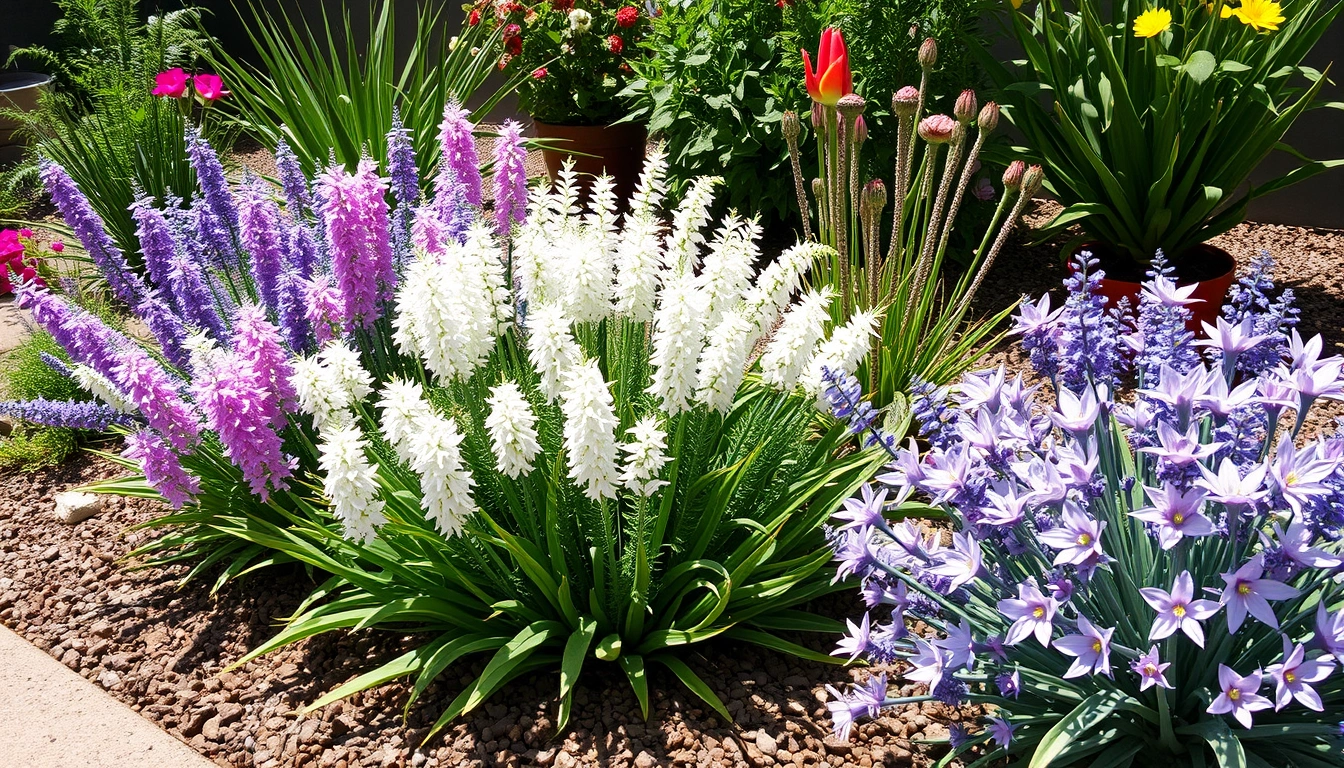
- If the bed is mis-zoned, 3 inches of mulch will not save it.
- Shade plants sit where they get under 3 hours, or where afternoon sun is blocked.
- Mature spread leaves at least 12 to 24 inches of breathing room between plants, more for shrubs.
- Separate heat islands from true sun: note places within about 3 to 6 feet of south- or west-facing walls, paving, or rock mulch.
August can expose a bad layout fast. Brutally fast.
If you want a xeriscape that survives summer without looking patchy by August, group xeriscape plants by sun, shade, and water needs so the bed matches what each plant can actually handle. Put full-sun, low-water plants together. Keep shade plants together. And tuck the few plants that want more moisture into their own small zone instead of mixing everything and watering by guesswork.
Who this is for, and what you need to know first
This applies to homeowners and renters planning a dry-climate bed, a front yard refresh, or a low-water border in a place that gets hot afternoons, reflected heat from walls, or long dry spells. I’m assuming you already know the basics of “xeriscape” as a style: fewer thirsty plants, more mulch, and planting choices matched to site conditions. Already have an irrigation system, a sun map, or even a simple hose timer? Helpful. Not required.
You do need three rough reads: where your yard gets 6 or more hours of direct sun, where it gets 2 to 4 hours, and where it stays shaded for most of the day; what kind of soil drains there; and which plants are truly drought-tolerant versus merely “once established” tolerant. That distinction matters. A lot. Generic advice blurs it, and that is where xeriscapes fail.
I would not use this approach if your site has standing water after rain, severe erosion, or a steep slope where irrigation runs off before it soaks in. Those are drainage and grading problems first, plant-grouping problems second. I also would not treat a young landscape the same as a mature one: most xeric plants still need regular watering during establishment, often for the first growing season, sometimes longer in very hot climates. For establishment timing and local watering guidance, check your local extension service or a qualified landscape professional. The Colorado State University Extension xeriscape resources and the University of Arizona Cooperative Extension are good starting points for climate-specific plant behavior.
A useful reference point for water language is the USDA and university extension vocabulary around “establishment” and “drought tolerance.” The exact plant labels vary by region, which is why I trust local extension guidance more than broad nursery tags. The Colorado State University Extension xeriscape resources and the University of Arizona Cooperative Extension are good starting points for climate-specific plant behavior.
How do I group xeriscape plants without making the bed look random?
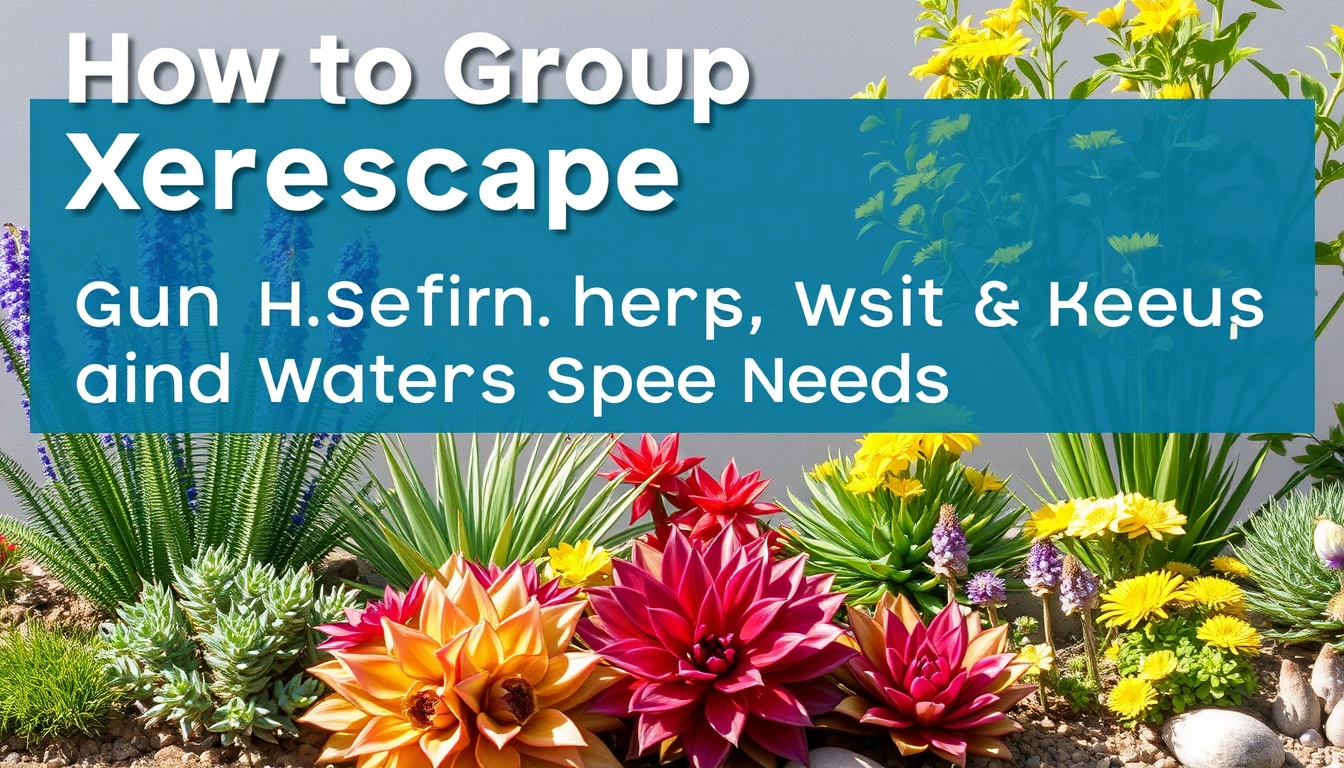
Start with sun exposure. Then water demand. After that, think about mature size and texture. That order matters because sun is the hardest condition to move, while water can be adjusted more easily with irrigation zones and mulch. I would not start by arranging plants just by color or bloom time; that usually creates a watering mess.
Here is the process I would use in a real yard:
- Map the site in three sun bands: mark areas as full sun (6+ hours), part sun/part shade (about 3 to 6 hours), and shade (under 3 hours). Verify by checking the same spots at 9 a.m., noon, and 4 p.m. on a clear day. A problem is assuming a wall-shadowed bed is “sunny” because the front yard looks bright at midday.
- Separate heat islands from true sun: note places within about 3 to 6 feet of south- or west-facing walls, paving, or rock mulch. These zones often behave hotter and drier than the rest of the bed. Verify by looking for wilting by late afternoon or soil that dries faster than nearby ground. A problem is putting a borderline plant here and then blaming it for failing.
- Sort plants into water tiers: make three groups—low water after establishment, moderate water, and occasional extra water. Verify each plant’s mature label and local extension guidance rather than relying on the word “xeric” alone. A problem is mixing a true desert plant with a “drought-tolerant” perennial that still wants more summer moisture.
- Keep high-water plants in a small, separate pocket: place these near a hose bib, drip zone, or naturally lower area, and keep the area under about 10% to 15% of the bed if your goal is a low-water landscape. Verify that you can water that pocket without soaking the rest. A problem is scattering thirsty plants through the whole yard, which forces the entire system to be watered up to the thirstiest plant.
- Group by irrigation zone, not just by bed: if you use drip, put plants with similar needs on the same line or valve. Verify that emitters can be placed 12 to 18 inches from shrubs and closer—often 4 to 6 inches—from young perennials. A problem is putting shade groundcovers and sun shrubs on one schedule and hoping the timer sorts it out.
- Match mature size and canopy density: place taller plants on the north or back side of a border so they do not shade out sun lovers. Verify the expected mature spread, not the size in the nursery pot. A problem is planting a 3-foot shrub in front of a 12-inch perennial that needs full sun.
- Use mulch as the final filter: apply 2 to 4 inches of shredded bark, composted mulch, or gravel appropriate to your climate. Verify that the mulch does not bury crowns or touch woody stems. A problem is piling mulch against stems, which traps moisture and invites rot.
- Test the layout before planting: set pots in place for a week, then observe glare, wind, and afternoon shade. Verify that the “hot” plants are still in the hottest spots and the shade plants are actually protected. A problem is planting straight from a list without watching the bed through a full day.
The main trick is not getting every plant into a perfect category. It is building small neighborhoods with similar water and light needs. If a plant’s label says “part shade” and “low water,” I would put it with the part-shade group first, then fine-tune water. Sun exposure is less negotiable than irrigation.
What do sun, shade, and water really mean in xeriscape design?
They mean you are matching plant physiology to microclimates, not decorating empty space. “Microclimate” is the small climate inside one bed: under eaves, beside stone, near turf, at the base of a fence, or in a wind tunnel between buildings. Two plants 8 feet apart can need different care if one gets reflected heat and the other gets morning shade.
A common mistake is treating “full sun” as a single condition, so it helps to consult your local extension service or a qualified landscape professional when you are unsure how a spot behaves. In practice, 6 hours of cool morning sun is not the same as 6 hours of brutal afternoon sun in July. South- and west-facing exposures are harsher because they combine heat, glare, and drying wind. Some sun-tolerant plants still scorch in a curbside strip or beside concrete. That is no joke.
Shade is not automatically moist. Under a dense tree or a roof overhang, soil can be as dry as a sunny bed because the canopy blocks rain and roots compete for water. That is why I separate shade plants into “dry shade” and “moist shade” in my own notes. Dry shade plants can handle 2 to 3 hours of light and root competition; moist shade plants need more consistent soil moisture and are the wrong choice for a truly lean xeriscape unless you can isolate them.
Water need is not just a plant trait; it is also a soil and spacing issue. Sandy soil drains quickly and favors plants that dislike wet feet. Clay soil holds water longer but can suffocate roots if overwatered or compacted. A plant that needs “low water” can still fail in clay if the planting hole becomes a bowl of standing water after irrigation. That is why drainage matters as much as the label.
I would also be careful with gravel mulch in very hot climates. Gravel can work, but it often increases reflected heat around some plants and can dry the top layer faster than organic mulch. It is not a default upgrade. In many mixed plantings, 2 to 4 inches of shredded organic mulch is the safer way to keep moisture even.
For terminology, “hydrozoning” means grouping plants by water use so one irrigation schedule fits one zone. It is a standard landscape design concept, and it is exactly what you want here. A bed without hydrozones tends to drift toward overwatering because the thirstiest plant sets the schedule for everything else.
When should I stop grouping by a simple sun/shade rule?
Stop using the simple rule when the site has one of these specific conditions, because the plant group you choose will need a different layout or a different water strategy.
Steep slope of about 15% or more: water will run off before it soaks in — use terracing, basins, or erosion control before planting.
Heavy clay with puddles lasting longer than 24 hours after irrigation or rain: roots may suffocate — improve drainage or choose plants for wet feet, not xeric species that hate saturation.
Deep shade under established trees: root competition and low light make many standard xeric plants fail — switch to dry-shade plants and reduce expectations for flowering.
Very hot reflected-heat sites beside concrete, stucco, or stone: sun-tolerant plants can still scorch — move the most delicate plants at least 3 to 6 feet away from the heat source.
Mixed irrigation already locked in place: if one valve waters lawn and xeric bed together, your grouping will be compromised — separate zones or accept higher water use.
New plantings under 12 months old: establishment watering can override the “low-water” label — keep them in a distinct nursery-style section until roots fill out.
If those conditions are present, the answer is not “ignore grouping.” It is “change the site or narrow the plant list.” A plant that is right for the climate can still be wrong for the exact spot.
The mistakes people actually make, and what they cost
The biggest mistake is grouping by botanical family instead of by site need. A bed full of succulents, salvias, and grasses can still fail if one corner gets afternoon shade and another corner gets reflected heat. The cost is uneven growth, which makes the whole design look careless.
Another mistake is planting by water need alone and ignoring sun. A shade-loving, moderate-water perennial in a full-sun bed will often burn at the edges and stall out. The better move is to let sun exposure decide the major grouping, then fine-tune water within that zone.
A third mistake is using one irrigation timer for everything because it is easier. It is easier, but it pushes you toward the needs of the thirstiest plant. The better option is separate drip zones or at least separate run times, even if that means 2 valves instead of 1.
A fourth mistake is overplanting thirsty “filler” plants to make a xeriscape look lush right away. That can work for a season, but it drags the whole bed into higher water use. I would keep these plants in a clearly limited pocket, not sprinkled across the border.
A fifth mistake is ignoring mature size. A plant that is 8 inches tall in a 1-gallon pot may become a 30-inch mound that shades out the plant behind it. The fix is to plan spacing from the mature spread, often 18 to 36 inches for many perennials, depending on species.
A sixth mistake is treating mulch as a cure-all, so it helps to check your grouping and site conditions with a local extension service or qualified landscape professional before relying on it to fix problems. Mulch helps, but it does not correct a bad grouping or a bad slope. If the bed is mis-zoned, 3 inches of mulch will not save it.
How do I handle mixed beds and awkward corners?
Build transitions. Do not force every plant into one rule. The edges of a yard are where xeriscaping gets real: the strip under a tree, the hot corner by the driveway, the narrow side yard with shade in morning and sun in late afternoon.
For mixed beds, I would create three bands. Put the driest, sunniest plants on the outermost hot edge. Put the moderate-water plants in the middle. Put the most shade-tolerant or slightly thirstier plants near the house side, downspout line, or a spot that naturally catches overflow. Keep each band at least 2 to 3 feet wide if possible so the transitions are readable, not jagged.
In awkward corners, the plant is often less important than the heat and wind pattern. A 2-foot-wide side yard with a stucco wall on one side and a fence on the other can bake in summer even if it is technically “part shade” for part of the day. In that spot, I would use fewer species, larger drifts, and tougher plants rather than a mixed collection of small specimens.
Tree shade is another edge case. If tree roots dominate, irrigation has to be shallow and spread out, often with several emitters rather than one. Plant roots and tree roots will compete in the top 6 to 12 inches of soil, so dry-shade plants usually do better than anything that needs regular deep watering. If the canopy is dense, treat the bed as dry shade even if the soil looks rich, and consider getting local extension or arborist advice before planting.
Where a lawn meets xeriscape, I would keep a clean transition line. Grass irrigation and xeric irrigation rarely belong on the same schedule. If you cannot separate them physically, at least separate the zones mentally and in your plant list. A border that mixes turf, shade perennials, and sun shrubs usually becomes a compromise that favors none of them.
A quick checklist before you plant
You are ready to plant when each group has its own light and water lane, and each lane has a clear irrigation plan. Before you dig, I would check these five things:
- Full-sun plants sit where they get 6+ hours of direct sun.
- Shade plants sit where they get under 3 hours, or where afternoon sun is blocked.
- Low-water plants are not parked next to thirsty ones unless the bed is tiny and managed by hand.
- Mature spread leaves at least 12 to 24 inches of breathing room between plants, more for shrubs.
- The driest zone is not the lowest spot in the yard.
A good result looks slightly spare at first. That is fine.