Last updated: September 10, 2026
Key Takeaways
- Rock mulch wins when your xeriscape bed is hot, sunny, and built to stay dry with low maintenance.
- Rock mulch wins for open, sun-baked xeriscape beds with slow-growing plants and a clean, architectural look.
- Dark rock can raise surface temperatures, and even light-colored gravel can store and radiate heat into the bed.
- Rock also does not improve soil.
Rock mulch wins when your xeriscape bed is hot, sunny, and designed to stay dry with low maintenance. Wood mulch wins when the bed still needs soil improvement, easier plant establishment, and less heat stress on roots. For rock mulch vs wood mulch xeriscape beds, the choice has less to do with “water saving” than with temperature, maintenance, and plant type. Honestly, that trade-off is the whole story. I write from landscape and horticulture judgment, not from having used these materials myself, and that matters here because the right choice depends less on “water saving” and more on temperature, maintenance, and plant type.
The real question: which mulch helps a xeriscape bed do its job?
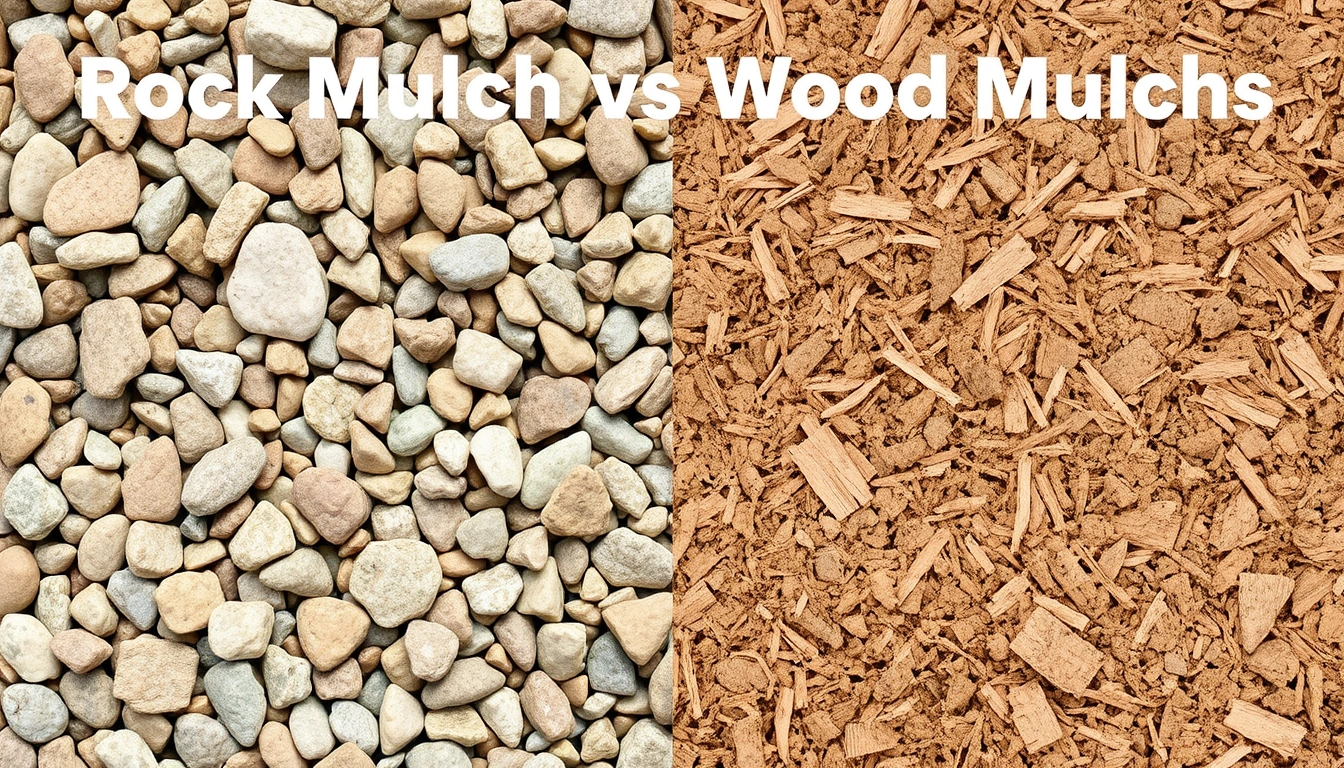
Rock mulch is the safer long-term pick for many true xeriscape beds because it does not break down, blow away as easily, or add a constant layer of organic matter that some drought-tolerant plants do not need. Wood mulch is the better choice when the bed still behaves like a garden bed, not a finished desert planting: young shrubs, newly planted perennials, drip irrigation, and soil that still benefits from organic matter.
That is the core decision. Want the bed to look finished and stay put for years? Rock is usually the stronger fit. Want help with plant establishment and cooler root zones? Wood usually does more good.
A generic comparison often gets this wrong by treating “xeriscape” as a single planting style. It is not; if you are unsure whether your planting is a true desert-style bed or a transitional landscape, consult a local landscape professional or extension service. A gravel bed around agave, yucca, penstemon, and cactus has different needs than a front yard converted into drought-tolerant shrubs under drip. One is closer to a dry landscape; the other is still a managed planting. Apples and oranges, really.
The other mistake is assuming “mulch” always means “less water use.” In practice, both materials can reduce surface evaporation compared with bare soil, but their side effects differ. Research and extension guidance from Colorado State University Extension and the University of Arizona Cooperative Extension note that mulch choice affects temperature, soil moisture, and maintenance differently. The mulch that trims evaporation is not always the one that helps the plant most. That tension matters.
Rock mulch: when it wins, and what it costs you
Rock mulch wins for hot, open xeriscape beds with slow-growing plants and a clean, architectural look. It is especially good around plants that already come from dry, rocky environments: agaves, aloes, sedums, lantana, rosemary, salvias, and many ornamental grasses. In those settings, a stone layer acts like a durable top dressing and does not need annual replacement the way organic mulch does.
The biggest strength is stability. Rock does not decompose into soil, so it does not keep feeding weeds the way a fresh layer of wood can if it is not replenished correctly. It also stays put better in windy sites. In climates with intense sun and low rainfall, that durability matters because mulch movement and replenishment are part of maintenance, and maintenance is the hidden cost nobody remembers on day one.
Heat is the catch. Dark rock can raise surface temperatures, and even light-colored gravel can store and radiate heat into the bed. In a 2023 University of Arizona Extension guide, surface temperature differences under hardscape materials were presented as a practical concern for desert plantings. Useful in some cool-season or frost-prone sites, yes. But it can punish shallow-rooted plants, especially young transplants that have not yet pushed roots deep. A bed full of reflective stone can also make irrigation mistakes harder to forgive; a missed drip cycle becomes more obvious on stressed foliage.
Rock also does not improve soil. If your bed has compacted clay or poor structure, gravel will not fix that. It can even make future soil work more annoying, because removing stone to plant or amend later is slow, messy labor.
Who should skip rock? Gardeners still building plant size, people with thin-rooted annuals, and anyone who wants the mulch itself to contribute organic matter. I would also avoid it for beds that need regular replanting; digging through stone is a nuisance every time you add or remove plants.
Wood mulch: where it helps, and where it backfires
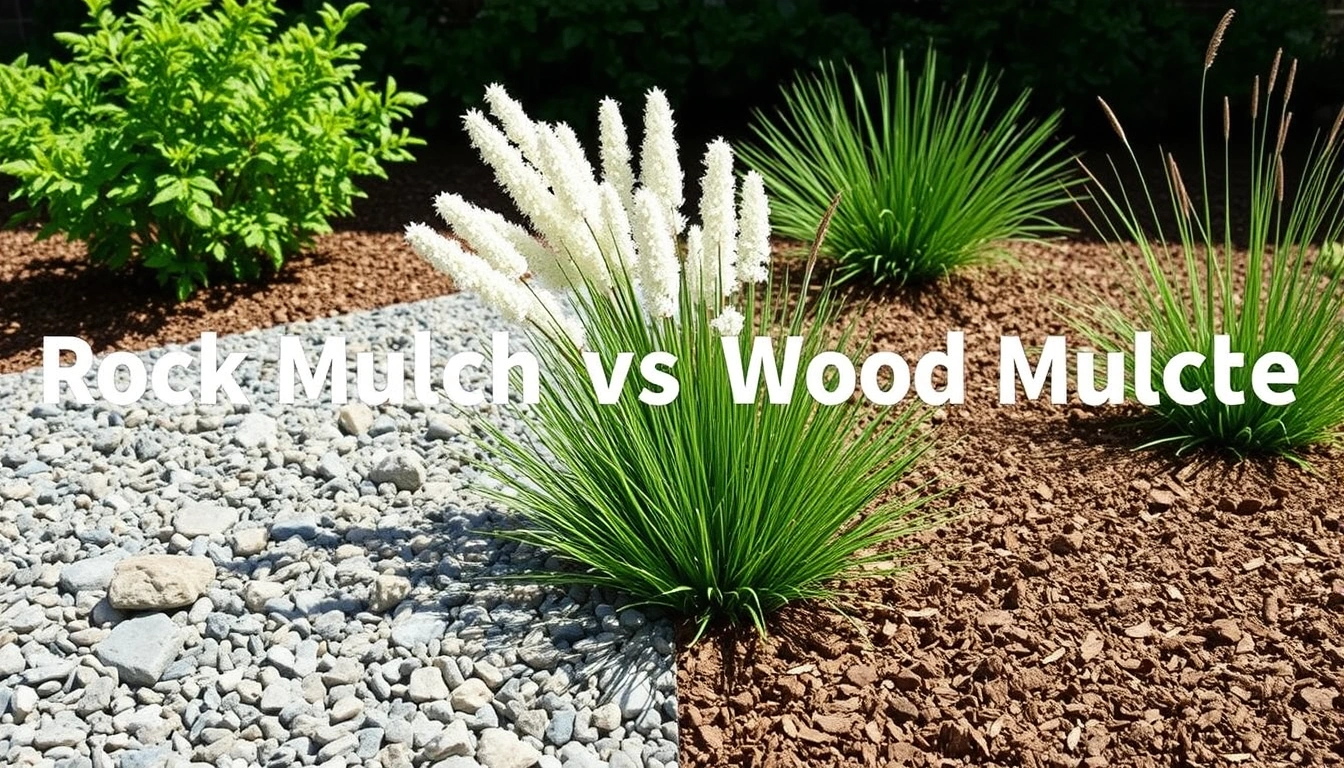
Wood mulch wins for new xeriscape plantings, especially during the first one to three growing seasons after installation. That is when roots are still spreading and the bed still needs help moderating soil temperature. Organic mulch is better at buffering those swings than rock, and that matters for drought-tolerant shrubs that are drought-tolerant after establishment, not before it.
Its main advantage is biological. As wood breaks down, it contributes organic matter to the top layer of soil. In a bed with sand, lean topsoil, or tired urban fill, that is not a small thing. Better soil structure means better infiltration and better root exploration, both of which support drought tolerance later. For a xeriscape bed that is really a transition from ordinary landscaping to lower-water planting, wood mulch is often the more forgiving choice.
It also gives you a cleaner weed-management window at the start. A properly maintained 2- to 4-inch layer of shredded bark or wood chips can block light to germinating weed seeds and keep the planting area easier to manage than exposed soil. Extension guidance commonly recommends staying in that range rather than building a deep mound.
The downside is maintenance. Wood breaks down and has to be refreshed. It can also drift, compact, or get thinned out by irrigation and wind. In some landscapes, organic mulch can harbor insects or slugs more readily than rock, especially in shaded pockets and near dense plantings. If it is piled too deeply against crowns or stems, it can rot tissues.
Who should skip wood? Beds with a very strict desert aesthetic, hot reflected-sun sites where extra heat is already a problem, and owners who want a once-and-done surface. I would also skip it in places where the bed edges are difficult to maintain, because blown chips and yearly top-offs become a recurring chore.
Rock mulch vs wood mulch for xeriscape beds: the honest side-by-side
Rock is the better long-term surface for finished xeriscape beds; wood is the better nursery surface for beds still maturing. That is the clearest split, and it shows up in every practical decision.
| Criteria | Rock mulch | Wood mulch | Winner for [condition] |
|---|---|---|---|
| Longevity | Can last many years without decomposition | Breaks down and needs refreshing | Rock, for low-maintenance sites |
| Soil improvement | None | Adds organic matter over time | Wood, for poor or compacted soil |
| Heat around roots | Can increase heat load, especially dark stone | Buffers soil temperature better | Wood, for young plants |
| Weed suppression | Good if installed thickly and kept clean | Good at first, but thins as it decomposes | Rock, for long-term suppression |
| Ease of planting changes | Hard to move and replant through | Easy to pull back and rework | Wood, for evolving beds |
| Wind resistance | Stays put better in exposed sites | Can blow or scatter | Rock, for windy yards |
| Water absorption and infiltration | Water passes through, but runoff can still happen on slopes | Helps keep soil surface cooler and less crusted | Wood, for new plantings |
| Appearance | Clean, permanent, desert-appropriate | Softer, more natural, less “finished” | Rock, for architectural xeriscape |
| Maintenance cycle | Occasional raking and cleaning | Periodic top-off and renewal | Rock, for minimal upkeep |
The table sounds simple, but the consequences are not. Rock makes a bed feel permanent. Wood makes a bed feel planted. If you want the surface to disappear into the design, rock usually works better. If you want the soil to keep acting like living garden soil, wood is the more useful tool.
I would not pretend there is a universal winner. There is a correct material for the plant palette, the soil, and the amount of upkeep the owner is willing to do. A xeriscape bed is not a billboard; it is a growing system.
How I would choose based on the plant list
Rock wins for drought-adapted plants that dislike sitting in damp, organic material. Think agaves, yucca, prickly pear, desert spoon, many sedums, and other plants commonly used in desert-style plantings. These plants are often chosen for their structure and drought tolerance, and rock matches that character. It keeps the bed visually dry and reduces the chance that the surface stays too cool and too wet after irrigation.
Wood wins for mixed drought-tolerant shrub beds, especially when the plant list includes young shrubs, salvia, Russian sage, butterfly bush in appropriate climates, or perennial borders that still need root-zone protection. In those beds, the mulch is part of establishment, not just decoration. A 2- to 3-inch layer of wood chips or bark can make that first season easier on the plants.
For cactus-heavy beds, I would lean rock almost every time. For a native-plant meadow look, especially where the soil is still being improved, I would lean wood. For a front-yard renovation where the owner wants a clean “finished” look without redoing the surface every year, rock is usually the better long-term answer.
The wrong choice is often made by copying what looks good at a nursery or a model home. Model homes favor rock because it reads as permanent and tidy. But a newly planted bed often needs the opposite: cooler soil and easier amendment. That is why I separate “looks right today” from “supports the bed for the next 2 to 5 years.”
One more practical note: if the bed is on drip irrigation, either mulch works better than bare soil, but wood is usually kinder to the plant during establishment while rock is usually kinder to the maintenance schedule later.
When would I pick the other one?
The verdict flips in a few specific cases, and those cases matter more than most general advice admits.
First, choose wood if the soil is poor and you need help building it over time. In a bed with thin topsoil, construction fill, or compacted clay, wood mulch gives you a slow organic boost that stone never will. That is not a small advantage; it changes how the bed behaves after a 2- to 3-inch mulch layer has settled.
Second, choose wood if the planting is young. A bed planted this season should not be treated like a finished desert display; if you are unsure how quickly the roots are establishing, consult a local extension agent or landscape professional. New roots need cooler soil and a more forgiving moisture buffer. Rock can come later.
Third, choose rock if the site is extremely windy or exposed. In those yards, shredded bark can migrate, pile up, or leave bare patches. Rock is simply more stable.
Fourth, choose rock if the bed is designed around succulents, boulders, and a strong desert aesthetic. In that setting, the mulch is part of the composition. Rock helps the bed look intentional instead of temporary.
I would also say that neither material is ideal if your irrigation is still uncertain. A drip system with poorly placed emitters, overspray, or chronic runoff should be fixed before you worry about mulch type. Mulch cannot compensate for bad water delivery.
My verdict: which one should you choose?
Choose rock mulch if your xeriscape bed is already established, gets strong sun, and you want the lowest-maintenance surface with a finished desert look. Choose wood mulch if the bed is newly planted, the soil needs improvement, or your main goal is cooler roots during establishment. Neither if the site needs major soil repair, because that problem should be solved before you pick a top dressing.
That is the call I would make. Rock is the better permanent answer. Wood is the better starter answer.
What most people forget before they buy either one
Both materials can fail if the depth is wrong. Too little mulch barely helps; too much can smother stems, hide irrigation problems, or create sloppy drainage at the crown. The usual target people hear is a few inches rather than a skim coat, but the real point is to keep mulch away from stems and trunks. That matters more than whether the bed has stone or bark.
People also forget that slopes change the answer. On a slope, rock can move during runoff if it is too small or too smooth, while wood can float and collect in pockets after heavy irrigation or a storm. On level ground, either is easier to manage. On a slope, the edge treatment and irrigation layout matter as much as the mulch itself; if the grading is uncertain, consult a landscape professional before choosing a material.
The last mistake is treating mulch as a one-time purchase instead of a system choice. Rock has a higher up-front labor burden because it is harder to move and install cleanly. Wood has a recurring labor burden because it decomposes and needs topping up. If someone wants to avoid all maintenance, neither choice is honest; for a xeriscape bed, system planning matters more than a single purchase.
For background on mulch depth and soil-protective practices, I would point readers to university extension guidance such as Colorado State University Extension and the University of Arizona Cooperative Extension. For xeriscaping principles, the Environmental Protection Agency’s WaterSense materials are also useful starting points. The EPA’s WaterSense program offers xeriscaping guidance, and extension sources such as CSU and Arizona discuss mulch depth, plant establishment, and soil temperature in practical terms.
Quick answers to the questions people ask most
Is rock mulch better than wood mulch for xeriscape beds?
Rock is better for established, heat-tolerant, low-maintenance xeriscape beds. Wood is better for young plantings and soils that still need improvement.
Does wood mulch use less water than rock mulch?
Not automatically. Both can reduce evaporation compared with bare soil, but wood usually cools the root zone better while rock usually lasts longer.
Can I use rock mulch around newly planted shrubs?
Yes, but I would be cautious in hot climates. New shrubs often do better with wood during establishment because it buffers soil temperature more gently.
Which mulch is better for cactus and succulents?
Rock usually fits better, especially in full sun and well-drained beds. I would avoid piling organic mulch against the crowns of these plants.
Can I mix rock and wood mulch in one xeriscape bed?
Yes, if the design is intentional. I would use stone in the hottest, driest exposed zones and wood where young plants need more root-zone protection.