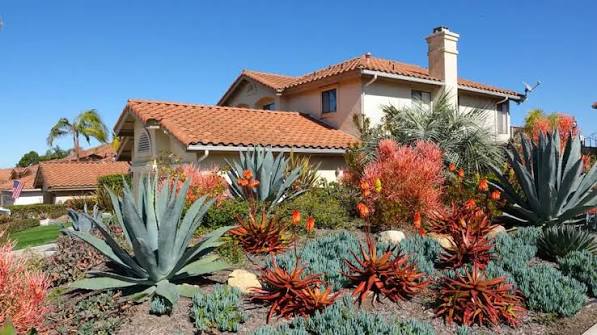
Last updated: September 10, 2026
Key Takeaways
- Clay that stays wet for 24 hours is a different problem from sand that drains in 20 minutes.
- Dig a hole about 12 inches deep and fill it with water.
- Check whether the plant needs regular summer irrigation for the first 1 to 2 years.
- If it is planted 18 inches from a path, the bed becomes a pruning job.
For xeriscape plants that stay alive with less water, climate zone comes first. Not the tag. This guide explains how to choose the right xeriscape plants for your climate zone by matching winter cold, summer heat, rainfall pattern, soil drainage, and sun exposure before color or bloom time. A plant that is drought-tolerant in the low desert may fail in a humid summer, and a plant that survives Zone 8 winters may die in Zone 5. Different rules, same outcome.
Who this is for — and what I assume you already know
A homeowner planting a bed, border, or whole yard usually wants less irrigation without turning the landscape into a graveyard of crispy shrubs. That is who this is for. I am assuming you already know your USDA Plant Hardiness Zone, or can find it from the USDA Plant Hardiness Zone Map, and that you can tell basic site conditions: full sun, part shade, clay soil, sandy soil, and whether water stands after rain. The USDA map only tells you average coldest winter temperature; it does not tell you whether a plant can handle your summer heat, humidity, wind, or poor drainage. That is where people slip. For zone basics, see the USDA Plant Hardiness Zone Map and your local extension service, such as the University of California Agriculture and Natural Resources plant resources, for climate-specific guidance.
Honestly, I would not treat this as a “buy any drought plant” project if your site has chronic flooding, a steep slope with runoff, deep shade under trees, or salty coastal spray. Those are not ordinary xeriscape sites. They need plant selection based on a narrower set of tolerances, and sometimes they need drainage work before planting. If you are trying to replace a high-water lawn with beds, the easiest path is usually to choose 3 to 5 backbone species per zone and repeat them rather than assembling a botanical sampler. Repetition looks dull on paper. In the ground, it saves headaches.
The standard shorthand for plant water needs is useful, but it is not enough. A “drought-tolerant” label may mean a plant survives after establishment with 1 deep watering every 7 to 21 days in a dry climate, not that it thrives with neglect in any yard. The real job is to match the plant’s cold hardiness, heat tolerance, water demand, and soil preference to the exact patch of ground you have. The old question is not whether it is “tough,” but whether it can stay healthy in your climate zone, as the University of Florida IFAS and Colorado State University Extension both note in their plant-selection guidance.
What does your climate zone really tell you?
Your climate zone tells you which winter lows a plant can survive, and only that. The USDA Zone number is a cold-hardiness guide. A Zone 7 plant may live through a typical Zone 7 winter, but still fail in a hot, humid Zone 7 summer if it hates muggy air, or in a windy Zone 7 site if its roots dry out too fast. So I would rarely choose xeriscape plants from zone alone.
For xeriscape planning, I use four climate questions. First: how cold does it get in winter, down to the lowest temperatures your site actually sees? Second: how hot and dry does summer get, including reflected heat off pavement, south-facing walls, and rock mulch? Third: how much rain falls, and when? A monsoon climate and a winter-rain climate ask for different plant timing. Fourth: what is the soil like after water? Clay that stays wet for 24 hours is a different problem from sand that drains in 20 minutes.
Two useful terms help here. “Hardiness” means a plant’s tolerance for cold. “Mesic” means moderate water needs, between dry-land plants and water-loving plants. Many landscapes fail because people confuse the two. A mesic perennial can be drought-resistant in the right soil once established, but it is not a xeriscape plant if it needs frequent irrigation in midsummer.
I also look at the extension service recommendations for the region. State university extension offices often publish plant lists by climate, soil, and sun. Those lists beat a generic “best drought plants” article because they are tied to local weather patterns. If you are in the Intermountain West, the Southwest desert, the Mediterranean West Coast, or the humid Southeast, the same plant can behave very differently in each place. For region-specific examples, compare the Arizona Cooperative Extension and Missouri Botanical Garden plant pages before you buy. The comparison is worth it; the wrong plant can turn fussy overnight.
How do I pick xeriscape plants that match my site?
Pick plants in this order: cold zone, heat and sun, soil drainage, mature size, and then appearance. I would use a simple 5-part filter and reject any plant that fails one of the first three.
- Confirm the cold zone. Look up the USDA zone for your address, then compare it to the plant tag or nursery database. See whether the plant is rated for your zone or one zone colder. If the label is missing a zone, treat that as a warning sign and consult a local extension horticulturist or qualified nursery professional before buying; a plant with no clear hardiness rating may be a poor fit for a true xeriscape bed.
- Check summer stress, not just winter survival. Match the plant to your heat exposure: full sun means 6+ hours of direct sun; part shade means 3 to 6 hours. Check whether the plant tolerates reflected heat, especially within 3 to 6 feet of a wall, driveway, or west-facing fence. If a plant wants cool afternoon shade and you place it on concrete, leaf scorch and weak growth are the likely result.
- Test drainage before you buy. Dig a hole about 12 inches deep and fill it with water. If water remains after several hours or into the next day, your site drains slowly. See whether the plant tolerates “moist but well-drained” soil or needs fast drainage. If the plant is labeled for dry, rocky soil and your hole stays wet, root rot becomes the main risk. If drainage is unclear, ask a local extension office or landscape professional to help assess the bed.
- Match mature size to the space. Use the plant’s mature width, not the 1-gallon pot size. Leave at least half the mature width between centers so air can move and roots are not fighting for water. If a shrub matures to 6 feet wide, spacing it 3 feet from the next shrub means you have planned for an overfull bed.
- Sort by water use after establishment. Favor plants described as drought-tolerant, low-water, or adapted to dry sites. See whether the plant needs regular summer irrigation for the first 1 to 2 years. If the plant must stay evenly moist, it is not a xeriscape choice for a low-input yard.
- Group plants with similar needs. Put the thirstiest xeric plants near downspouts, drip lines, or the edge of a bed where you can water them separately. See that each planting zone has one irrigation schedule, not three. If you mix a high-water perennial with a cactus bed, one of them will suffer.
- Choose a backbone, then accents. A practical rule is to build most of the bed from the toughest species, then use 2 or 3 accent plants for flowers or texture. See that the accents have the same zone and drainage tolerance as the backbone plants. If your bed depends on a single fussy plant for interest, the design is fragile.
A good example of the logic is this: in a hot dry Zone 8, a rosemary shrub, anise hyssop, salvia, and native grasses may all fit the same soil better than a hydrangea, even if both are called “landscape plants.” In a colder Zone 5, a plant like feather reed grass may be more dependable than a tender Mediterranean shrub. The point is not to chase the most “desert-looking” plant. The point is to choose plants that can live on your site with fewer interventions.
Which plant traits matter more than the label?
The label matters less than four traits: root depth, leaf strategy, growth habit, and season of stress. Xeriscape plants succeed in different ways, and those differences matter.
Deep-rooted perennials and shrubs can search a larger soil volume for moisture after they are established. That usually gives them an edge in dry spells. Fine-rooted plants need more careful irrigation during establishment and often more mulch to reduce evaporation. Succulents store water in leaves or stems, which helps in arid climates with intense sun, but many of them hate cold, wet winters. Evergreen broadleaf shrubs lose water in winter and wind, so they are not automatically better than deciduous shrubs.
Growth habit matters too. Low mounds, clumping grasses, and open shrubs usually handle drought better than dense hedges that trap heat and need repeated pruning. A plant that requires weekly shearing is usually not a low-input choice, even if it survives on little water. I would avoid choosing a plant purely because it stays green year-round if that means more irrigation, fertilizer, or disease pressure.
Season of stress is the hidden test. Some plants do fine in hot, dry summers but fail in wet winters. Others survive cold winters but burn in late-afternoon sun. Many ornamental grasses are fine in dry heat but struggle in poorly drained clay. Many Mediterranean herbs prefer dry summers and dry winters. Many native prairie plants handle a wide range of temperatures but need good drainage. Matching the stress season is often more important than matching the flower color. That part surprises people, but it really matters.
If you want a shortcut, ask three questions for every candidate plant: Does it match my USDA zone? Does it tolerate my worst month, not my average month? Does it live in my soil without special treatment, or should I ask a local extension professional first? If the answer to any one of those is no, I would keep looking.
What should I plant in different climate types?
Choose plants from your climate pattern, not from a universal drought list. A xeriscape in Zone 4, a xeriscape in coastal California, and a xeriscape in Phoenix are not built the same way.
In cold, dry climates such as Zone 4 to 5 high plains or mountain valleys, I would look for plants that combine cold hardiness with low summer water use: native or regionally adapted grasses, sages that are truly hardy in your zone, yarrow, penstemon, and shrub roses that do not demand constant watering. The risk here is winterkill from cold plus winter wet. Avoid plants that advertise drought tolerance but only survive in warmer zones.
In hot, arid climates such as low desert areas, the better xeriscape plants are usually heat-adapted shrubs, cacti, succulents, and desert perennials that can handle reflected heat and alkaline soils. The trap here is overplanting trees or shrubs that want more humidity than the site gives. I would be cautious with plants that need summer fog, cool nights, or frequent foliar moisture.
In Mediterranean climates with dry summers and wetter winters, the emphasis shifts. Many plants that hate summer irrigation but dislike waterlogged winter soil do well here. Lavender, rosemary, teucrium, ceanothus in the right setting, and many Mediterranean natives can fit. The risk is not summer drought alone; it is winter rot in clay or low spots.
In humid climates, xeriscape is still possible, but the plant pool changes. I would favor drought-tolerant natives and tough ornamentals that handle humidity and disease pressure, not only drought. A plant can be drought-tolerant and still collapse from powdery mildew, root rot, or fungal leaf spot in sticky summer air. That is why region-specific extension lists matter so much. For examples, see North Carolina State Extension and the Lady Bird Johnson Wildflower Center native plant database.
When should I stop and choose a different plant?
Stop and choose a different plant when the site and the plant are asking for opposite things. The wrong choice can cost a season of growth, a replacement plant, and extra irrigation.
Your soil stays wet for more than 24 hours after watering or rain: that means drainage is too slow for many desert or Mediterranean xeriscape plants — switch to wet-tolerant natives, raise the bed 6 to 12 inches, or improve drainage before planting.
The plant needs “regular water” to stay attractive: that is mesic, not true low-water planting material — use it only where you can irrigate separately, or skip it for a drier species.
You only have deep shade under mature trees: full-sun xeric plants will stretch, thin out, and decline — choose shade-tolerant dry-site plants instead, and expect slower growth.
Your winter lows are one zone colder than the tag allows: the plant may die back or die outright in a normal cold snap — pick a plant rated at least one zone colder than your site.
The bed is narrow and close to pavement or walls: reflected heat can push a plant beyond its comfort range — choose smaller plants, install drip irrigation, and avoid species that scorch in hot exposure.
You want a low-water bed but also a tightly clipped hedge: frequent shearing drives growth and water demand — use a looser shrub form or a different design.
That is the point where “drought tolerant” stops meaning low-maintenance and starts meaning expensive mistakes.
What mistakes do people make with xeriscape plants?
The most common mistake is treating all drought-tolerant plants as interchangeable. They are not. A yucca, a Russian sage, and a native oak each tolerate drought in different ways, with different cold limits and different soil needs. The result is predictable: one thrives, one limps along, one dies. The fix is to sort by climate type and soil first, not by the label “waterwise.”
Another mistake is buying plants for their adult look without checking mature size. A 5-gallon shrub can become an 8-foot plant in a few years. If it is planted 18 inches from a path, the bed becomes a pruning job. Constant cutting follows. So does a plant that never shows its natural form. I would usually read the mature width before reading the flower color.
People also overwater xeric plants after planting. New roots need moisture, but saturated soil suffocates roots. The consequence is root rot or weak surface-rooting. The alternative is deep, infrequent watering during establishment, then longer intervals once the root zone is filled in. For many plants, that means watering deeply once or twice a week at first, then backing off as the plant settles.
A fourth mistake is using rock mulch everywhere. Rock can make sense in some climates, but in very hot sites it dominates the soil surface and can make root zones run hot. That trade-off is real.