Last updated: September 10, 2026
Key Takeaways
- Don’t pick the contractor bid with the loudest sales talk.
- In dry climates, evaporation and overspray can wipe out the efficiency you expected.
- Spray irrigation still has a place, but it is often the wrong baseline for most xeriscapes.
- Even so, spray systems need tight design; otherwise water ends up on sidewalks, driveways, and fences.
Drip irrigation is usually the first answer for irrigation options drought-tolerant landscaping, especially in mixed beds and on slopes. That’s the blunt truth. In a typical retrofit, drip is often paired with a smart controller, and many contractors can put in a small zone in a day. Spray heads are usually the wrong first choice because they waste water on hardscape and wind, while soaker hose is only worth considering for small, simple beds. I write about landscape systems as a contractor-facing topic because the right answer shifts with plant spacing, soil, slope, local water rules, and climate. California’s Model Water Efficient Landscape Ordinance limits inefficient watering in many projects; EPA WaterSense also notes that efficient irrigation starts with matched zones and proper scheduling.
Drip vs. spray: what actually changes the outcome?
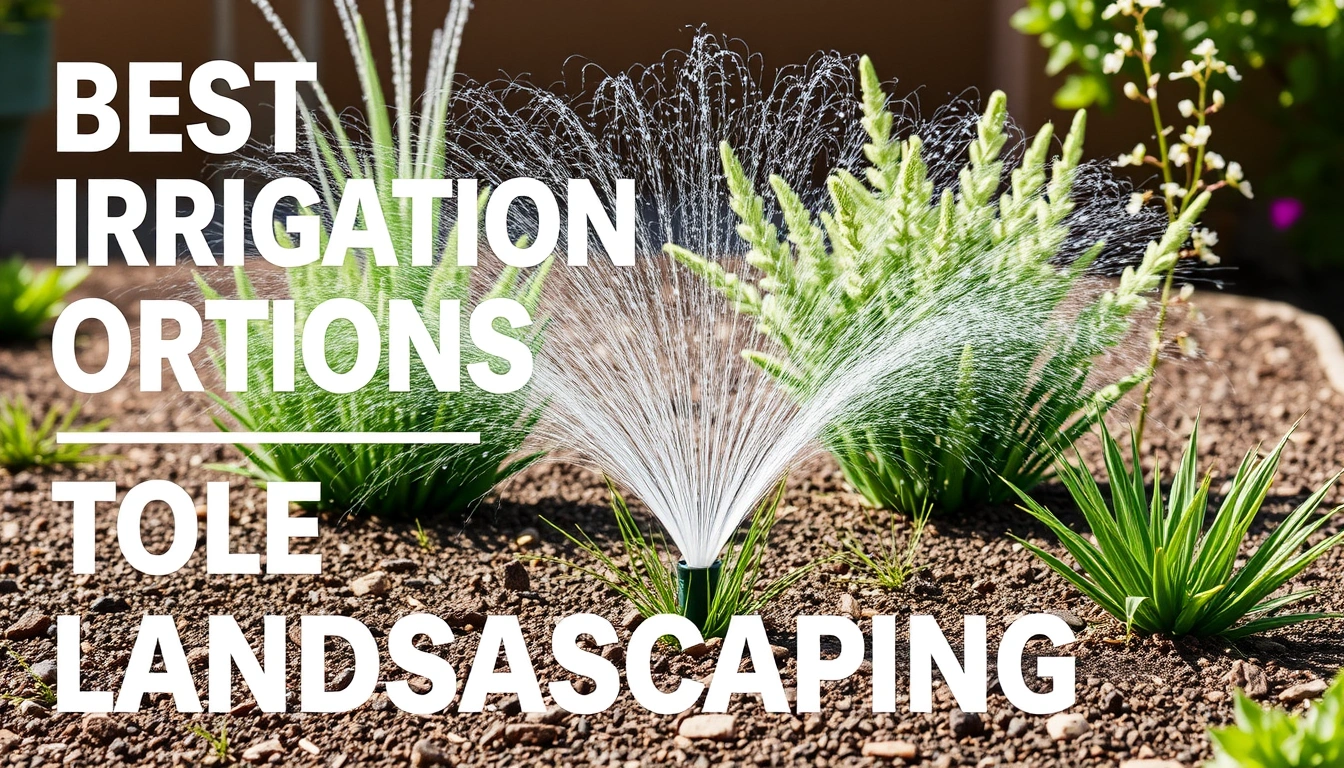
Drip often wins for most drought-tolerant landscapes because it puts water at the root zone instead of throwing it across the air. That matters. In dry climates, evaporation and overspray can wreck the efficiency you thought you were buying. It also matters on sloped yards, gravel mulch, and plantings built around California native shrubs, Texas sage, rosemary, lavender, agave, manzanita, or other low-water plants that dislike wet foliage. EPA WaterSense reports that landscape irrigation can account for nearly 50% of a home’s outdoor water use, which is why irrigation options drought-tolerant landscaping need to be chosen carefully.
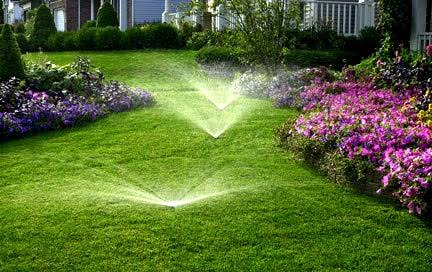
Spray irrigation still has a place, but it is often the wrong baseline for most xeriscapes. Use it only when the planting is dense, the zones are small, and the bed edge is clean. Even then, design has to be precise to keep water off sidewalks, driveways, and fences. In many drought-conscious jurisdictions, that wasted water is exactly what local rules are trying to stamp out. If the site is unusual, call a licensed irrigation professional and check local guidance; the EPA WaterSense irrigation resources are a good starting point.
Here is the buying decision in plain language: drip is better when the goal is to water plants, not landscapes. Spray is better when the space is being treated like turf, which is usually the opposite of drought-tolerant design. Simple enough.
| Criteria | Drip irrigation | Spray irrigation | Winner for [condition] |
|---|---|---|---|
| Water placement | Delivers water at or near roots | Broadcasts water over a wider area | Drip for shrubs, perennials, and trees |
| Wind loss | Low | High in breezy yards | Drip in exposed sites |
| Overspray risk | Minimal if designed well | Common near paths, walls, and driveways | Drip for hardscape-heavy yards |
| Plant flexibility | Excellent for mixed low-water plantings | Better for uniform coverage | Drip for mixed beds |
| Clogging sensitivity | Higher; filtration matters | Lower at the emitter level | Spray for neglected systems |
| Slope performance | Strong with pressure-compensating emitters | Poorer if runoff forms | Drip on slopes |
| Maintenance | Periodic flushing and emitter checks | Nozzles and heads need alignment | Tie for different reasons |
| Best use case | Desert beds, shrubs, trees, narrow strips | Small uniform beds where full coverage matters | Drip for most drought-tolerant yards |
My take is straightforward: if you are calling a contractor for a drought-tolerant landscape, ask for drip first unless there is a clear reason not to. The main exception is a very small decorative bed where a properly designed spray zone is easier to service and still stays inside the planting area. Even then, I’d want the contractor to spell out head spacing, nozzle selection, and how runoff gets prevented. A system that waters the driveway is not “good enough” just because the plants are alive. In a lot of cases, a simple retrofit keeps the same plant material and cuts waste without redoing the whole yard.
What makes drip irrigation a strong default?
Drip is often the best default because it solves the core problem of drought-tolerant landscaping: getting water slowly, directly, and only where a plant can use it. That gives a contractor more control over irrigation scheduling, root-zone coverage, and water pressure across separate planting pockets. For a landscape with shrubs, groundcovers, and young trees in the same yard, drip lets each zone get the right application without turning the whole property into one compromise. No magic. Just better targeting.
The practical strength is not just efficiency; it is placement. A low-water bed usually has mulch, decomposed granite, boulders, or uneven spacing between plants. Drip lines and emitters fit that layout better than spray heads do. Pressure-compensating emitters are especially useful on slopes and longer runs because they help keep flow more even as line length changes. That detail matters more than most generic articles admit. The EPA WaterSense irrigation design guidance also emphasizes matching the system to plant water needs, which is one reason drip irrigation options drought-tolerant landscaping often outperform spray in mixed beds.
The weakness is just as real: drip can be annoying when it is installed carelessly. Skip filtration, use poor fittings, or leave tubing exposed where equipment can cut it, and the system turns into a repair job. Clogged emitters are the classic failure; then one dry shrub shows up, and then another. If the company cannot explain flush valves, filters, or how they will zone the system by plant type, I would keep looking. A system that saves water on paper but fails in the field is no bargain.
Drip is not the right answer for someone who wants a set-it-and-forget-it system with minimal inspection. It is also not ideal for a landscape that still includes meaningful turf areas, because grass usually needs a different watering pattern. But for a water-wise yard built around native or Mediterranean plants, drip is the option I would choose first.
If you are getting bids, ask for the line type, emitter spacing, filtration plan, and whether the system uses pressure regulation. Those specifics tell you more than a sales pitch ever will. A contractor who can’t speak clearly about those parts is not quoting a serious drip system.
When does a smart controller beat a basic timer?
A smart controller wins when the landscape has real seasonal swings, mixed exposure, or a homeowner who wants fewer manual adjustments. I would choose one when the yard includes both shaded beds and hot southern exposures, or when local watering restrictions change the allowed schedule. A basic mechanical timer can still work, but it depends on someone remembering to adjust run times after heat waves, storms, or cooler months.
For drought-tolerant landscaping, the real value of a smart controller is not novelty. It is correction. If the system can respond to weather data, soil conditions, or evapotranspiration-based scheduling, it can reduce the common problem of watering on autopilot. That is especially helpful for newly planted drought-tolerant landscapes, which need more frequent irrigation at first and less later. A good controller helps bridge that transition. EPA WaterSense says smart controllers can reduce outdoor water use by automatically adjusting schedules to weather and site conditions, which makes them a practical add-on for irrigation options drought-tolerant landscaping.
I would not oversell this option. A smart controller cannot fix a poor layout, a broken valve, or a badly matched emitter set. It also adds another layer of setup, and that setup matters. If the contractor does not properly label zones, set realistic schedules, and explain how to override automatic settings, the “smart” part becomes a nuisance. Some homeowners never use the features they paid for, then leave the controller on a bad factory program. Honestly, that happens more than people like to admit. In many installs, the best controller is the one that is simple enough to maintain.
For a contractor quote, the questions that matter are specific: does it support local weather-based scheduling, can it handle multiple zones independently, and will it work with the existing valve layout? If the answer is yes, smart controls are a strong upgrade. If the yard is tiny, the planting is uniform, and the watering schedule will rarely change, a smart controller may be more complexity than you need. According to EPA WaterSense, weather-based controllers can reduce outdoor irrigation waste by preventing unnecessary cycles.
Is soaker hose ever the right answer?
Soaker hose is right only for small, simple beds where the planting pattern is fixed and the homeowner wants the lowest-complexity option. I’d use it for a short foundation bed or a narrow vegetable border, not for a full drought-tolerant yard with slopes, bark mulch, or mixed shrubs. The main reason is control: soaker hose is blunt. It wets a strip, not a plant-specific root zone.
That bluntness is both the upside and the flaw. It is easy to install, easy to understand, and often cheaper to start with than a full drip system. For a rental property, a temporary landscape, or a very small front strip with closely spaced plants, that can be enough. But once the planting gets mixed, soaker hose starts wasting water in the spaces between roots. On slopes, it can also run unevenly. In practice, that means irrigation options drought-tolerant landscaping need more than a low initial price.
The other problem is durability. Soaker hose can kink, split, or clog, and once it degrades, the watering pattern gets patchy. That can lead to the worst kind of irrigation job: one that looks cheap up front and expensive later because plants die in a pattern no one can easily explain. If a contractor suggests soaker hose for a large landscape, I would ask why they are not proposing drip line with emitters instead. Fair question.
Soaker hose is not the best choice for a customer who wants a polished installation, long-term control, or neat zoning. I would also skip it if the yard has decorative gravel, exposed sun, or plenty of mulch movement from wind. It still has a place, but it is a niche answer, not the main one.
Which system gives the best value for a contractor-installed project?
Drip with a basic smart controller gives the best value for most contractor-installed drought-tolerant landscapes because it balances upfront cost, water control, and long-term flexibility. I’m not calling it the cheapest. Usually, it offers the best trade between installation quality and ongoing performance when a yard has more than one planting type. The EPA WaterSense program and university extension guides both support pairing efficient hardware with good scheduling.
For cost, the honest range is wide because labor drives the job more than parts do. A small retrofit on an existing yard is very different from a full redesign with trenching, new valves, backflow considerations, and zone separation. What affects the price most is line length, number of zones, whether the contractor needs to convert spray zones to drip, soil conditions, access, and whether the system needs pressure regulation or filtration upgrades. If a bid seems unusually low, that usually means something was left out. Even a simple residential retrofit can vary by hundreds or thousands of dollars depending on site complexity.
Time matters too. A simple small-bed project may be completed quickly, while a whole-yard conversion can take longer because of layout changes and testing. If the contractor says it is a one-day job but the property is large, has multiple beds, or needs trenching under hardscape, I would ask what is being excluded. A fast install is not a bargain if it skips flushing, labeling, or a proper controller setup.
For a homeowner choosing who to call, the best bid is not the one with the most buzzwords. It is the one that explains: which zones will become drip, where filtration goes, how the controller is programmed, and what maintenance is expected in the first season. A contractor who answers those questions clearly is more likely to deliver a system that survives August. For irrigation options drought-tolerant landscaping, that clarity is worth more than a generic “premium package.”
What should a contractor quote include?
A useful quote should specify the irrigation method, zone count, emitter or head type, controller type, and what gets excluded. I would want to see whether the contractor is converting an existing spray zone to drip, adding a new zone for trees, or building a separate schedule for sun and shade beds. If the quote just says “install irrigation,” it is too vague to compare.
The items that change the outcome most are concrete:
– filtration and pressure regulation for drip
– zone-by-zone scheduling
– emitter spacing or dripline layout
– backflow considerations where required by local code
– flushing and testing after install
– mulch or surface protection around exposed tubing
A bad irrigation job is easy to spot once you know what to look for. Water on sidewalks, puddling at one emitter, dry spots next to wet ones, exposed tubing in traffic areas, and controllers left on a generic schedule are all warning signs. So is a contractor who cannot explain how the system will be adjusted after plant establishment. Drought-tolerant landscaping usually needs one schedule for the establishment phase and a different one after roots are in. If that distinction is missing, the install is incomplete.
For locations with stricter water rules, such as many parts of the Southwest and California, the contractor should also know local watering-day restrictions and any turf-reduction requirements that affect zoning. If they act surprised by those rules, that is a bad sign. Irrigation is not just pipes; it is compliance, plant health, and timing.
What I would choose in different situations
I would choose drip irrigation for most drought-tolerant front yards, side yards, and mixed native beds. It is the cleanest fit for shrubs, perennials, and young trees, especially when the site has wind, slope, or hardscape nearby.
I would choose a smart controller when the property has several microclimates, the owner wants automation, or the local schedule changes often enough that manual adjustment becomes a burden. The controller is an upgrade to the watering logic, not a substitute for good design.
I would choose soaker hose only for a tiny, simple bed where the plants are close together and the owner wants the least complex setup possible. That is a narrow use case.
Choose drip if the landscape is the priority and you want the most reliable match for drought-tolerant plants. Choose a smart controller if the system is already well designed and you want it to adjust for weather and season. Neither if the yard still has large turf areas, severe pressure issues, or a contractor who cannot explain filtration, zone separation, and maintenance. In irrigation options drought-tolerant landscaping, the right answer is usually the one that matches the plant group and the site.
What should make you reconsider the whole plan?
You should reconsider irrigation entirely if the landscape plan itself is wrong for the climate. A thirsty plant palette with a “drought-tolerant” label still needs water, and no controller can make the wrong plants cheap to run. If the design includes too many hydrozones mixed together, or if the soil drains so poorly that water sits for hours, the better fix may be redesigning the bed before buying hardware. The best irrigation options drought-tolerant landscaping cannot overcome a bad plant list.