Last updated: September 10, 2026
Key Takeaways
- A single emitter 18 inches from the crown is often not enough in hot weather.
- Soak the root zone until the soil is moist 8 to 12 inches down.
- Mulch 2 to 4 inches deep.
- Keep mulch off the trunk by at least 3 to 6 inches.
A front yard can look polished without gulping water. That is the whole promise here. Low-water shrubs are the backbone of a front-yard xeriscape when you want curb appeal without a thirsty lawn. This guide to low-water shrubs that work well in xeriscape front yards focuses on plants that keep a clean shape, tolerate heat and reflected glare, and still look intentional in a space people see every day. I am assuming you already know your yard’s sun exposure and general climate zone, and that you want plants for established landscape beds rather than a temporary fill-in. Also, I am assuming you can water deeply during establishment for the first season; without that, even drought-tolerant shrubs struggle.
Not every yard fits this plan. This approach is not right for a front yard that stays wet, has heavy shade all day, or sits in compacted clay with no drainage and no plan to improve it. In those cases, the plant list changes fast, and sometimes the bigger issue is soil structure, not plant choice.
What makes a shrub truly xeriscape-friendly?
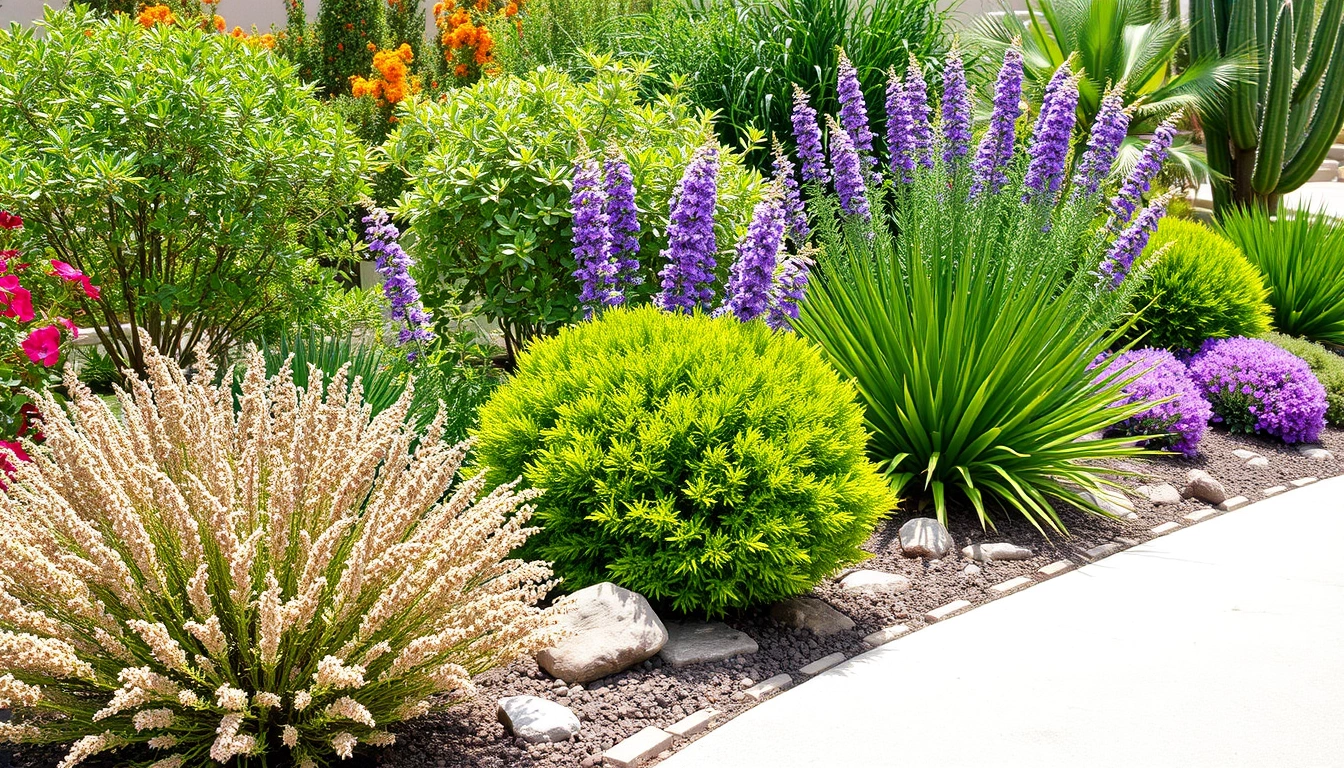
A xeriscape-friendly shrub is one that can survive on infrequent irrigation after it is established, usually in lean, well-drained soil and full sun to light shade. For low-water shrubs that work well in xeriscape front yards, I judge shrubs by four things: mature size, leaf texture, seasonal interest, and water demand once rooted in. “Drought tolerant” does not mean “no water ever”; it means the plant can handle dry intervals better than a typical foundation shrub or lawn replacement.
I use one phrase a lot here: establishment period. That means the first 6 to 18 months after planting, when roots are still filling the planting area. During that window, even low-water shrubs need scheduled watering. Afterward, the right shrubs can often live on occasional deep irrigation, especially in climates with spring rain or summer monsoons. The University of Arizona Cooperative Extension and Texas A&M AgriLife Extension both note that new landscape plants need regular water during establishment before they can rely on less frequent irrigation.
For front yards, I look for shrubs that do not collapse into a floppy mound or become a pruning chore every 6 weeks. A good xeriscape shrub should have a predictable mature width, usually listed on the plant tag or in a regional extension guide, so you can leave at least 2 to 4 feet of breathing room around it. Tight spacing can turn a clean front yard into a maintenance headache. Honestly, that is where a lot of people trip up.
My short list of dependable types includes Texas sage (Leucophyllum), lavender cotton (Santolina), rosemary (Salvia rosmarinus), manzanita (Arctostaphylos), dwarf pomegranate, globe mallow, hibiscus syracus, and some dwarf salvias. The exact winner depends on your winter lows, summer humidity, and how formal you want the yard to look. For regional plant selection, local extension plant guides are usually more reliable than a general nursery label. See also Texas A&M AgriLife Extension, University of Arizona Cooperative Extension, and Colorado State University Extension.
Which low-water shrubs look good in a front yard?
The best-looking choices are usually the ones that hold their shape and do not demand constant rescue pruning. In a front yard, low-water shrubs that work well in xeriscape front yards usually start with these:
- Texas sage (Leucophyllum frutescens): A staple in hot, dry climates. It likes heat and reflected sun and often blooms after humidity spikes or rainfall. It can get leggy if crowded or overwatered, so it is not for people who want a clipped hedge look unless they are willing to prune.
- Rosemary (Salvia rosmarinus): Best for sunny, well-drained spots. Upright cultivars can frame walkways or corners nicely. The downside is that older shrubs can become woody if sheared into a box.
- Manzanita (Arctostaphylos species): Excellent where winters are mild and soils drain fast. It offers sculptural trunks and evergreen foliage, which gives a front yard a more designed feel. It hates summer irrigation once established in many settings.
- Santolina: A compact gray shrub that fits low borders and geometric layouts. It can look crisp, but it dislikes heavy clay and winter wet.
- Dwarf butterfly bush: Useful where summer bloom matters, but it can look messy if not cut back in a controlled way.
- Globe mallow: Good for a softer, native-desert look. It flowers well but may go a little loose between bloom cycles.
- Dwarf wax myrtle or waxleaf privet in water-aware cultivars: These are more moderate-water choices, useful when you want a neater front yard and are not trying to go ultra-low-water.
I would not trust thirsty broadleaf evergreens just because the label says “drought tolerant.” That bucket often includes shrubs that survive dry spells but still look much better with regular irrigation. If your goal is a front yard that can stay attractive on about one deep soak every 2 to 4 weeks in summer after establishment, pick shrubs that are truly adapted, not merely tough. Different thing.
A basic price check helps: small container shrubs are often the least expensive way to start, but the real cost is pruning time and replacement risk if you pick the wrong species for your climate. A plant that costs less at the nursery can become the expensive one later. Cheap now, pricey later. Classic trap.
How do I choose the right shrub for my yard?
Start with sun, soil, and scale; those three decide whether the plant thrives or just hangs on. The right shrub for a sunny, fast-draining front yard in a dry inland climate is not the same as the right shrub for a coastal lot with wind and winter moisture. Low-water shrubs that work well in xeriscape front yards also need the right microclimate, not just the right label.
-
Map the sun for a full day. Mark where you get 6 or more hours of direct sun, where you get 4 to 6 hours, and where reflected heat hits from pavement or walls. Verify the hottest zone at 3 p.m. in summer, because that is where failures show up first. If a shrub label says “full sun” and your spot gets only 3 hours, expect thin growth and fewer flowers.
-
Check drainage with a simple 12-inch hole. Dig a hole about 12 inches deep and fill it with water twice; if water is still sitting there after several hours, drainage is poor. Verify that the planting area does not stay soggy after rain. If it does, drought shrubs with woody crowns can rot.
-
Match mature width to the bed. Leave at least 50 percent of the shrub’s mature width as clearance from walkways, steps, and windows. For example, if a shrub matures to 6 feet wide, give it about 3 feet of open space on the sides you need to keep clear. If the shrub must be sheared to fit, it is probably the wrong shrub.
-
Choose a water class, not just a look. I group shrubs into very low water, low water, and moderate water. A very low-water shrub may need only periodic deep irrigation after establishment; a moderate-water shrub still needs more regular summer moisture. Verify the plant’s needs against your climate, not just a nursery tag.
-
Decide how formal the front yard must look. If you want a crisp, architectural yard, pick shrubs with predictable outlines like santolina, rosemary, or compact manzanita. If you want softer, more natural lines, globe mallow and some salvias do better. If you want both, mix one structural shrub with two looser flowering shrubs.
-
Plan the irrigation before planting. Even low-water shrubs need a watering strategy in the first season. Verify that drip emitters can reach the root zone, not just the edge of the hole. A single emitter 18 inches from the crown is often not enough in hot weather.
-
Check winter behavior. Some xeric shrubs stay evergreen but can bronze or drop foliage in cold snaps. Verify your coldest expected temperature against the plant’s hardiness range. If your yard regularly freezes hard, skip tender species that only shine in mild winters.
The mistake I see most often is people choosing by bloom color alone. A purple-flowering shrub that outgrows the bed, needs repeated shearing, and burns in reflected heat is not a win, no matter how good the flower photo looked. That math stops working fast.
How do I plant them so they actually save water?
Water savings come from root spread, not from stuffing a shrub into a tiny hole and hoping mulch will fix everything. A well-planted xeriscape shrub usually needs a hole only 2 to 3 times as wide as the root ball and no deeper than the root ball itself, with the top of the root flare at or slightly above finished grade. Low-water shrubs that work well in xeriscape front yards save the most water when they are planted to spread outward quickly.
- Set the planting hole width at 2 to 3 times the root ball. Dig wide, not deep, so roots can move outward. Verify that the shrub sits level with the surrounding soil or 1 inch high if the soil tends to settle. A shrub planted too deep often shows slow decline and yellowing.
- Expose the root flare. The root flare is the point where the trunk widens into roots. Clear soil until you can see it. Verify that no nursery potting mix is mounded over it. If the flare is buried, the crown can stay too wet.
- Loosen circling roots. Cut or tease apart roots that spiral around the pot, especially in 1- to 5-gallon containers. Verify that roots point outward into the planting hole. If you leave girdling roots in place, they can strangle the plant later.
- Backfill with native soil unless it is pure rubble. Use the soil that came out of the hole, breaking up clods and removing rocks larger than 2 inches. Verify that the backfill matches surrounding soil texture. A heavily amended “pot in the ground” can trap water.
- Water deeply at planting. Soak the root zone until the soil is moist 8 to 12 inches down. Verify that water is not running off the surface. If it beads up or escapes, the soil is hydrophobic or compacted.
- Mulch 2 to 4 inches deep. Keep mulch off the trunk by at least 3 to 6 inches. Verify that the mulch ring stays open at the crown. Mulch piled against stems invites rot and rodents.
- Use a simple first-season irrigation schedule. In hot weather, many shrubs need deep watering about once a week at first, then less often as roots expand. Verify the soil 6 inches down before watering again; it should be moist, not saturated. If leaves wilt in the morning or the soil stays soggy for days, the schedule is wrong.
- Prune lightly, not aggressively. Remove only dead wood, crossing stems, or a few inches of leggy growth. Verify that the shrub keeps a natural shape. If you shear off major growth every month, you are forcing a high-maintenance plant into the wrong job.
By the end of the first season, you want full foliage, obvious new growth, and a plant that needs less water than it did in month one. If it is still stressed, sparse, or constantly burned at the tips, the plant or the placement is wrong.
When should I stop and choose something else?
I stop and choose something else when the site or the design goal fights the shrub from the start. Xeriscape is not a magic label, and some front yards are simply the wrong setting for the most water-thrifty shrubs.
Heavy clay that stays wet after rain: This means root oxygen is limited and woody shrubs can decline fast — switch to raised planting beds, improve drainage, or choose species suited to periodic wet feet.
Deep shade for most of the day: Most low-water shrubs want at least 4 to 6 hours of sun — use shade-tolerant plants instead, because sun lovers will stretch and thin out.
Weekly overhead sprinklers that cannot be changed: Constant wet foliage can cause disease and make desert shrubs look ragged — convert to drip irrigation or pick shrubs that tolerate more regular moisture.
A front yard that must stay tightly clipped: Many true xeric shrubs resist hedging and look ugly when forced into squares — choose plants that naturally stay compact, or accept higher pruning time.
Severe winter freeze without snow cover: Tender drought-tolerant shrubs may suffer dieback even if they handle summer heat well — choose hardier regional natives or more cold-tolerant evergreens.
Salt spray or salty soil: Some low-water shrubs tolerate drought but not salt — select salt-tolerant species specifically, or the foliage will scorch and the plant may fail.
Zero irrigation after planting: Even the toughest shrub needs establishment water — if no one can water for 6 to 12 months, the project is too risky and the planting window should wait.
That is where a lot of generic advice falls apart. It treats “low-water” as the only filter. In practice, sun, drainage, winter low, and maintenance style matter just as much.
What are the mistakes that cost people the most?
The biggest mistakes are the ones that create more water use, not less. I see the same ones over and over in front-yard xeriscapes.
-
Picking shrubs for flower color instead of mature size. The consequence is overcrowding, constant pruning, and stressed plants. The correct alternative is to read the mature width first and design the bed around that number, not the nursery bloom photo.
-
Planting in a narrow strip of compacted soil. The consequence is shallow roots and fast drought stress. The correct alternative is to widen the bed, loosen the planting area, and give roots at least a few feet of usable soil.
-
Using rich compost everywhere. The consequence is a shrub that roots into the amended hole instead of spreading into the native soil. The correct alternative is light or no amendment unless drainage is poor for a specific reason.
-
Shearing every shrub into the same shape. The consequence is bare interiors, weak flowering, and a formal look that fights the plant. The correct alternative is selective pruning once or twice a year, timed to the shrub’s bloom cycle.
-
Overwatering after the first season. The consequence is lush but weak growth, surface-rooted plants, and more disease pressure. The correct alternative is to taper irrigation gradually after establishment and check soil moisture before turning the system back on.
-
Ignoring mature spacing in the first year. The consequence is that low-water shrubs that work well in xeriscape front yards quickly outgrow the bed and require hard pruning. The correct alternative is to leave room for the plant at year 5, not just month 5.
-
Choosing nonregional shrubs because they were on sale. The consequence is a yard that looks fine in the nursery but struggles in local heat, wind, or winter lows. The correct alternative is to match the plant list to your climate zone and local extension advice.
When all of those mistakes pile up, the yard stops acting like a xeriscape and starts behaving like a thirsty landscape with a drought label on it.